Get Big the Small Way: Why AgriTech Needs to Rediscover Bootstrap Principles
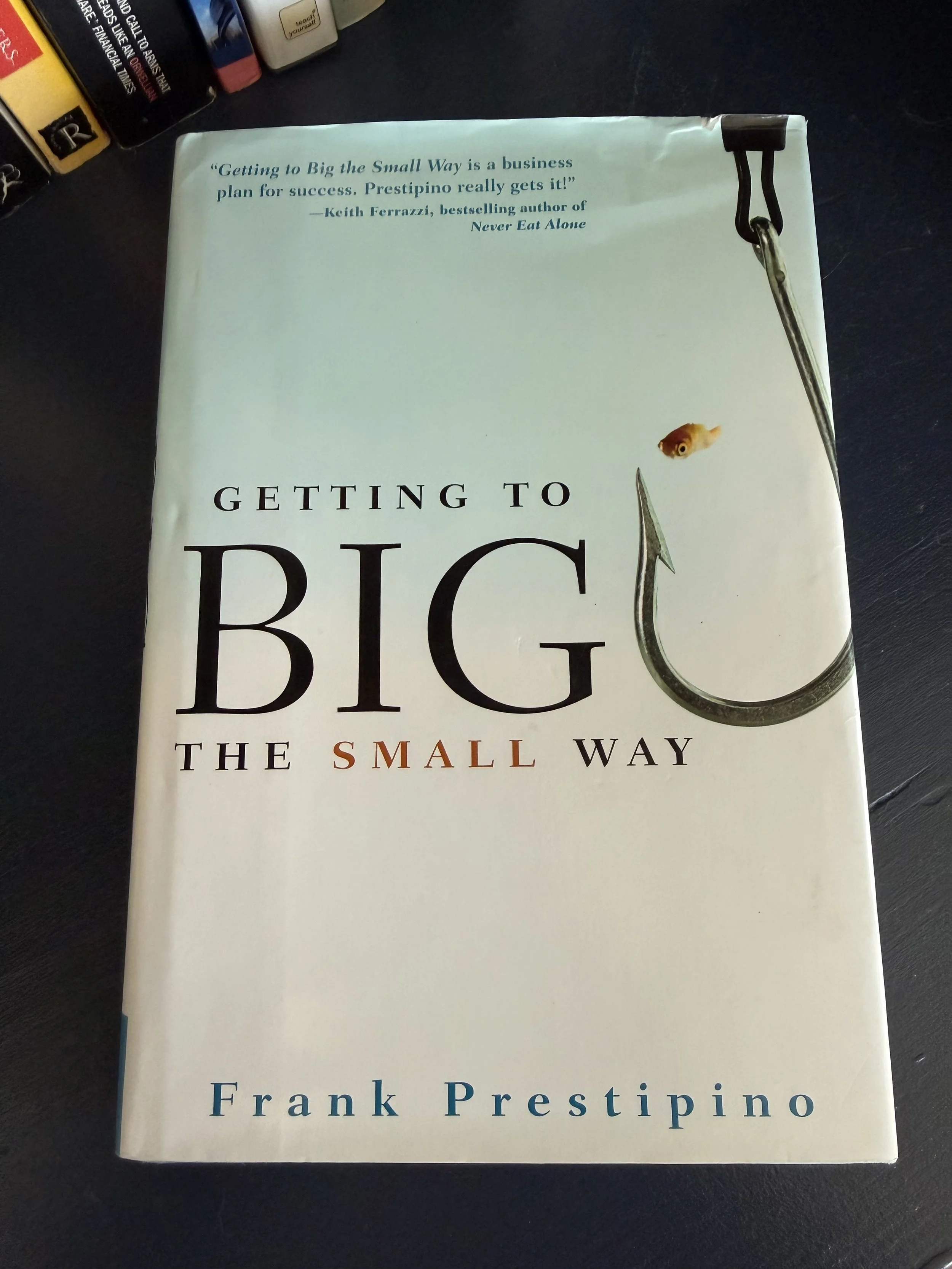
Getting to Big the Small Way, written by Frank Prestipino
My mother gifted me this book when I started my first business in 2006. Back then, there was no startup ecosystem as we know it today, no VCs, no accelerators, no founder communities. You just built a business, figuring it out as you went.
In the absence of those support systems, this book became my framework. It taught me how to systematically bootstrap, how to grow through incremental improvements rather than big bets, and how to build something sustainable. Those principles have stuck with me and evolved into the foundation of how I think about business growth today.
This philosophy isn't just smart business theory. It's the operating model agriculture has used for generations. And it's exactly what AgriTech companies need to embrace if they want to survive and scale sustainably.
The Problem: We're Building Unicorns for a Workhorse Industry
Agriculture doesn't reward the "move fast and break things" mentality. Equipment manufacturers like Case IH operate on 6% net margins. Farmers face constant margin compression as an economic reality. When AgriTech startups pitch unicorn valuations built on 70%+ gross margin assumptions, they're building on foundations that don't exist in agriculture.
The result? Companies that look impressive on pitch decks and media releases but collapse under the weight of their own capital structure. Sixty-five percent of agritech companies are self-funded, and one in four have raised concerns about their viability.
The Alternative: Get to Big the Small Way:
1. Start With Precise, Provable Value
Don't try to transform the entire farming operation. Identify the one problem where your technology delivers measurable, immediate ROI. Prove it works with early adopters. Document the results. Then expand.
2. Optimize for Survival, Not Velocity
Time-in-market matters more than time-to-market in agriculture. Farmers remember companies that disappeared after taking their money. They reward consistency and long-term support. Build for the long game.
3. Let Unit Economics Drive Capital Decisions
Every dollar raised must strengthen unit economics, not just fuel growth. If you can't see a clear path to profitability with your current raise, you're not ready to scale, you're building a more expensive version of an unproven model.
4. Align With Agricultural Capital
The best investors for AgriTech aren't traditional VCs chasing 10x returns in five years. They're agricultural corporates and and private investors who understand compounding returns over time and value strategic alignment over exit timelines.
What "Big" Actually Looks Like in Agriculture
Getting big the small way doesn't mean staying small. It means building companies worth $50-500 million through disciplined execution, not chasing billion-dollar valuations that break agricultural economics.